
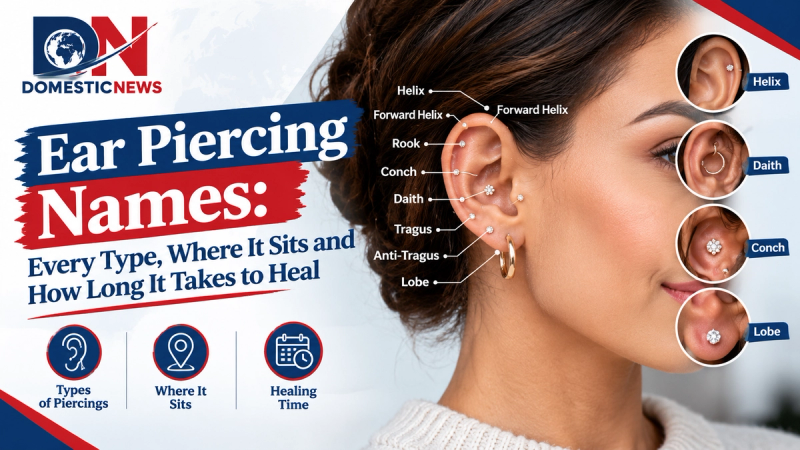
The main ear piercing names are lobe, upper lobe, helix, forward helix, tragus, anti‑tragus, daith, rook, snug, conch, industrial, orbital, and flat. Lobe piercings go through tissue and heal fastest. The other ear piercing names go through cartilage that take longer to heal ( 6 to 12 months to settle fully) and carry a higher risk of complications. If you have ever shown a piercer a photo. Said "that one, on the inside bit" this is for you. Ear piercing names vary a little between studios so if you are unsure take a photo of the placement you want and ask the piercer to confirm what it is called.
The chart
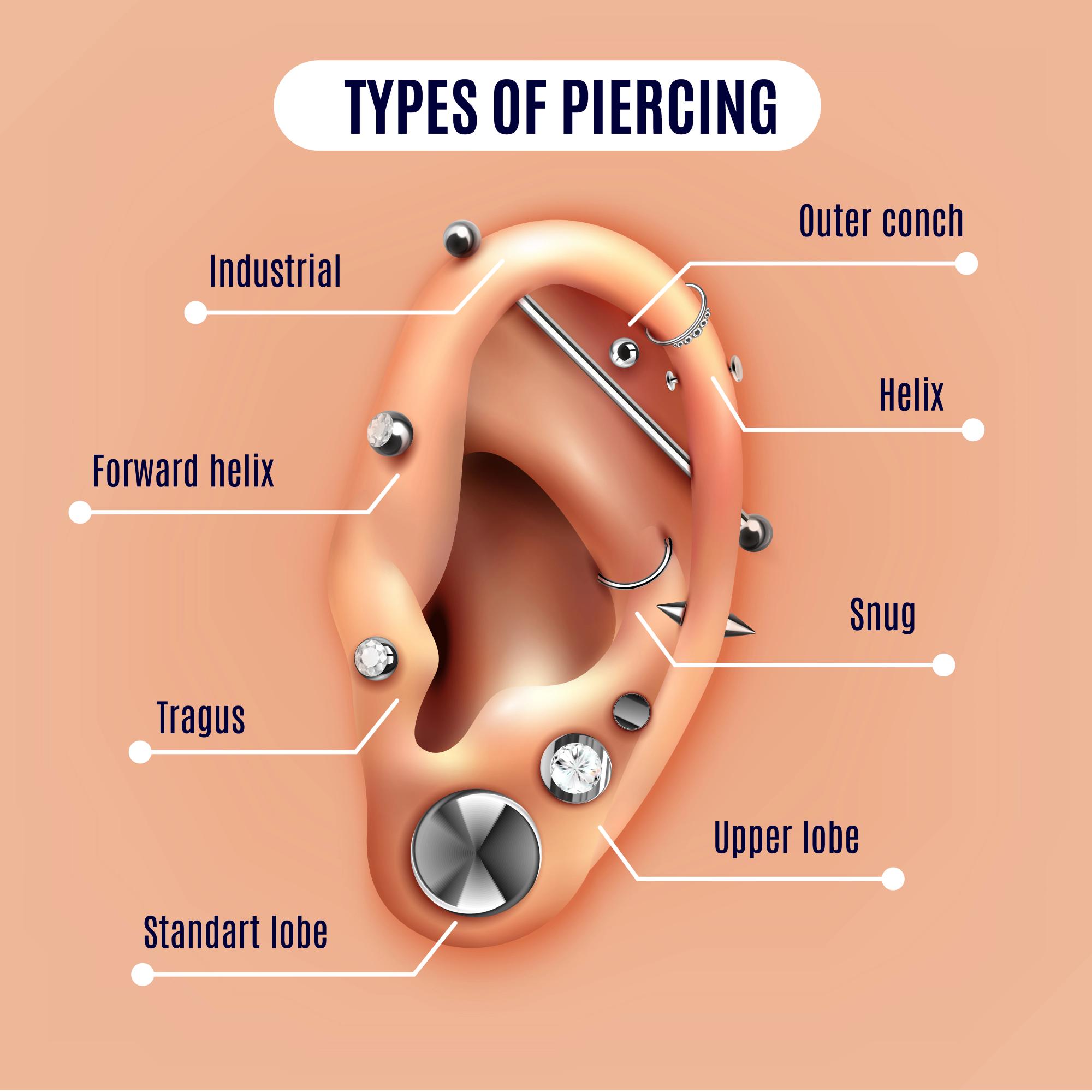
| Piercing | Where it goes | Tissue |
|---|---|---|
| Lobe | The soft bottom of the ear | Soft tissue |
| Upper lobe (second or third lobe) | Just above the first lobe hole | Soft tissue |
| Transverse lobe | Straight across the lobe with a bar | Soft tissue |
| Helix | The upper outer rim | Cartilage |
| Forward helix | The front part of the rim, nearer your face | Cartilage |
| Flat | The smooth, flat area of cartilage on the upper ear, between the outer rim and the inner ridge | Cartilage |
| Tragus | The small flap of cartilage in front of the ear canal | Cartilage |
| Anti-tragus | The small bump opposite the tragus, above the lobe | Cartilage |
| Daith | The inner fold just above the ear canal | Cartilage |
| Rook | The ridge above the daith, in the upper inner ear | Cartilage |
| Snug | The inner ridge along the edge of the middle ear | Cartilage |
| Conch (inner and outer) | The "bowl" in the centre of the ear | Cartilage |
| Industrial | Two holes in the upper ear, usually forward helix and helix, joined by one bar | Cartilage (two) |
| Orbital | Two holes joined by one ring | Soft tissue or cartilage |
The ones people ask about most
The lobe is the classic first ear piercing. The lobe piercings go through tissue and have a good blood supply so the lobe piercings usually heal quickly and are easy to heal. Many people stack two or three lobe piercings above the lobe.
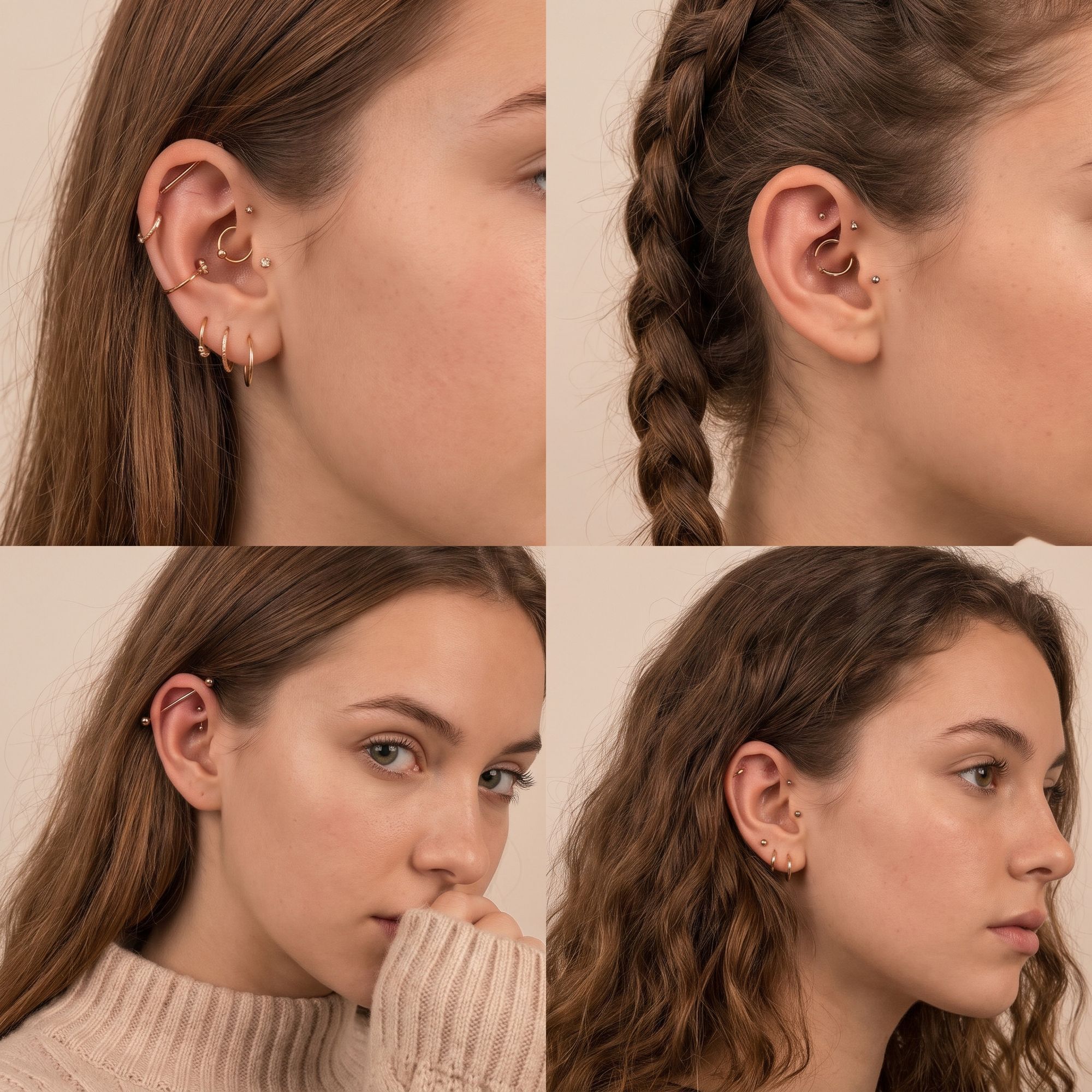
A helix goes through the outer rim of the ear and for many people the helix piercings are the first cartilage piercing after the lobe piercings. A forward helix piercings sit closer to the front of the ear. People often get a pair or a small cluster of forward helix piercings with little studs.
The tragus is the flap of cartilage in front of the ear canal. Some people feel pressure or hear a crunching sound at the tragus piercings because the tragus is close to the eardrum. The anti‑tragus piercings sit opposite the tragus. Anti‑tragus piercings are less common and the shape of your cartilage matters so a piercer will advise whether your ear is suitable for an anti‑tragus piercings.

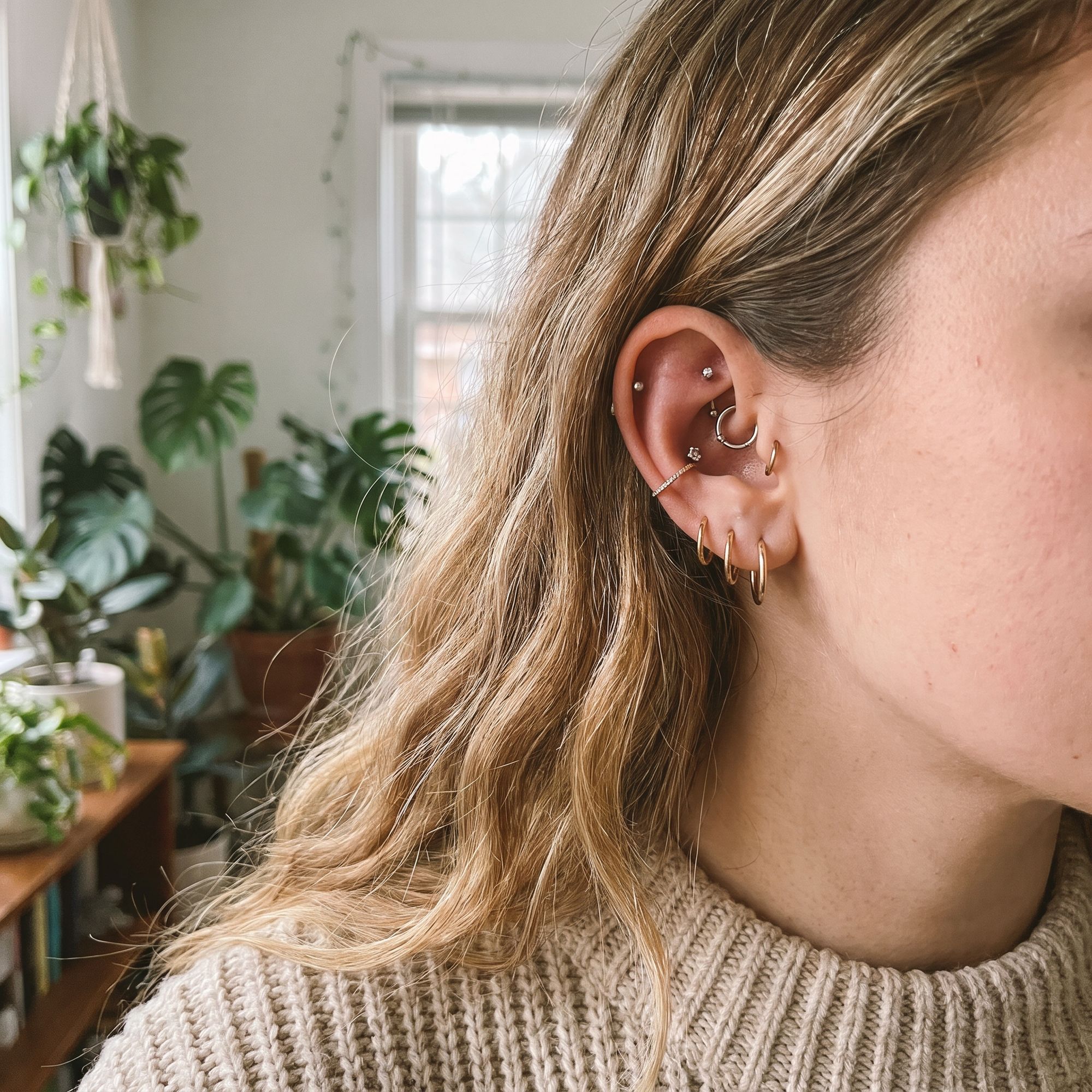
A daith piercings go through the inner fold of the ear and the rook piercings sit higher above the daith. You may see people link daith piercings to migraines on the internet. There is no medical evidence that daith piercings help with migraines so do not get a daith piercings for that reason. A rook piercings require a defined ridge of cartilage so not everyone can have a rook piercings.
The snug piercings run through the ridge of the ear. The snug piercings are tricky to do and are often considered one of the uncomfortable piercings to heal so choose an experienced piercer. The conch piercings are the bowl in the middle of the ear either inner or outer and the conch piercings accept hoops and studs well. An industrial piercings consist of two piercings linked by a barbell and the industrial piercings heal more slowly and are fussier than a single hole. An orbital piercings consist of two holes joined by a ring in the lobe or cartilage.
How long do they take to heal?
This is where guides contradict each other. It is worth knowing why.
Two UK council aftercare leaflets we checked say earlobe and ear cartilage piercings take around 6 to 8 weeks to heal. Piercing studios and jewellery brands often say cartilage piercings take 6 to 12 months to heal and snug and industrial piercings up to a year or longer.
Both can be true. The first number is roughly when the surface looks calm. The second is when the channel inside has fully settled. Cartilage gets blood flow, than the lobe so it heals slowly and can flare up long after it looks fine. A sensible rule is to treat it as healing for least a few months and not swap jewellery or sleep on it until your piercer says it is ready.
| Piercing | Rough healing guide (varies by source) |
|---|---|
| Lobe | Around 6 to 8 weeks, sometimes a few months |
| Helix, tragus, conch, daith, rook | Commonly 6 to 12 months |
| Snug and industrial | Often 9 to 12 months or longer |
Do they hurt?
It depends on you and the placement. Most pain charts put the lobe at the bottom around 2 out of 10 and the snug and industrial at the top around 8 with cartilage piercings in between. That is opinion more than measurement and a quick practised piercer makes a difference.
Risks and infection
Ear piercings are generally safe when they are done with technique and looked after but cartilage is less forgiving than the lobe. The Cleveland Clinic notes that upper ear piercings are more likely to get infected and that infections there can sometimes be serious. Cartilage infections can need antibiotics so see a doctor than waiting.
Bumps happen too. Torbay Councils guidance mentions that cartilage piercings can occasionally form lumps called granulomas and plenty of bumps turn out to be irritation than infection. Get one checked if it does not settle. Cheap metals can cause reactions so ask your piercer about implant‑grade materials.
Signs of infection are spreading redness swelling that keeps getting heat, thick or coloured discharge throbbing pain or a fever. Get help promptly especially for cartilage.
Looking after a new one
This follows council guidance and common piercer advice but your own piercers instructions come first. Wash your hands before you touch it. That is the biggest thing you can do against infection. Clean it the way your piercer tells you with a sterile saline rinse. Dry it gently with a disposable paper towel rather than cotton wool, which can leave fibres behind. Don’t. Turn the jewellery and don’t swap it out early. Try not to sleep on it and be careful with hats, headphones, phones and hair. Stay out of pools, hot tubs and the sea until it is healed.
Choosing a piercer
Piercing businesses are normally registered with the council so ask to see the registration. Look for a professional setup with sterile single‑use needles, gloves and a separate piercing area. Ask what jewellery material they use, as implant‑grade titanium is a choice. Be wary of piercing guns on cartilage because many studios use needles and consider them more precise and hygienic so ask what they use. Recent reviews that mention aftercare and healing are the ones.
Which first?
If you are new to piercing start with the lobe. If you want cartilage a helix is the common choice. Save the snug, rook, daith and industrial for when you know how your ear heals and you have found a piercer you trust.
Frequently asked questions
What're the different names of ear piercings?
The main ones are lobe lobe transverse lobe, helix, forward helix, flat, tragus, anti‑tragus, daith, rook, snug, conch, industrial and orbital.
What is the popular ear piercing after the lobe?
The helix is one of the popular partly because it is easy to place and suits a range of jewellery.
Which ear piercing hurts the most?
Most charts rate the snug and industrial piercings as the painful and the lobe as the least. Everyone’s pain tolerance differs.
How long do cartilage piercings take to heal?
Council guidance often says 6 to 8 weeks for the healing while studios commonly say 6 to 12 months for full healing and longer for snug and industrial piercings.
What is the difference between a helix and a forward helix?
A helix is on the outer rim of the ear. A forward helix is on the part of the rim closer to your face.
Is a daith piercing good for migraines?
There is no medical evidence that it is so do not get one, for that reason.
Sources and further reading
- Torbay Council: Ear and face piercing aftercare
- Cleveland Clinic: Infected ear piercing
- Healthline: How to treat an infected ear piercing
- Wikipedia: Earring
- Wikipedia: Tragus piercing
Keep reading on Domestic News
- What is a Russian manicure?: another trend where hygiene and training matter
- What is a head spa?
- All beauty guides | Editorial standards